Latest Episodes

Featured Contributors

Lorem ipsum dolor sit amet, consectetur adipiscing elit. Sed nec pellentesque purus. Nunc finibus urna eget est molestie, non dignissim nulla cursus. Proin hendrerit, lacus vitae imperdiet rhoncus, tortor quam sodales lorem, vitae hendrerit est nulla at dolor. Quisque dictum dui eget turpis dapibus pharetra.

Amelia Grange

LIFESTYLE CONTRIBUTOR

Lorem ipsum dolor sit amet, consectetur adipiscing elit. Sed nec pellentesque purus. Nunc finibus urna eget est molestie, non dignissim nulla cursus. Proin hendrerit, lacus vitae imperdiet rhoncus.

Markus Millions

BUSINESS CONTRIBUTOR

Lorem ipsum dolor sit amet, consectetur adipiscing elit. Sed nec pellentesque purus. Nunc finibus urna eget est molestie, non dignissim nulla cursus. Proin hendrerit, lacus vitae imperdiet rhoncus.

Yoga For Beginners

Yoga For Beginners
  • Published On: November 27th, 2024
  • Mapping the Bosnian Genocide

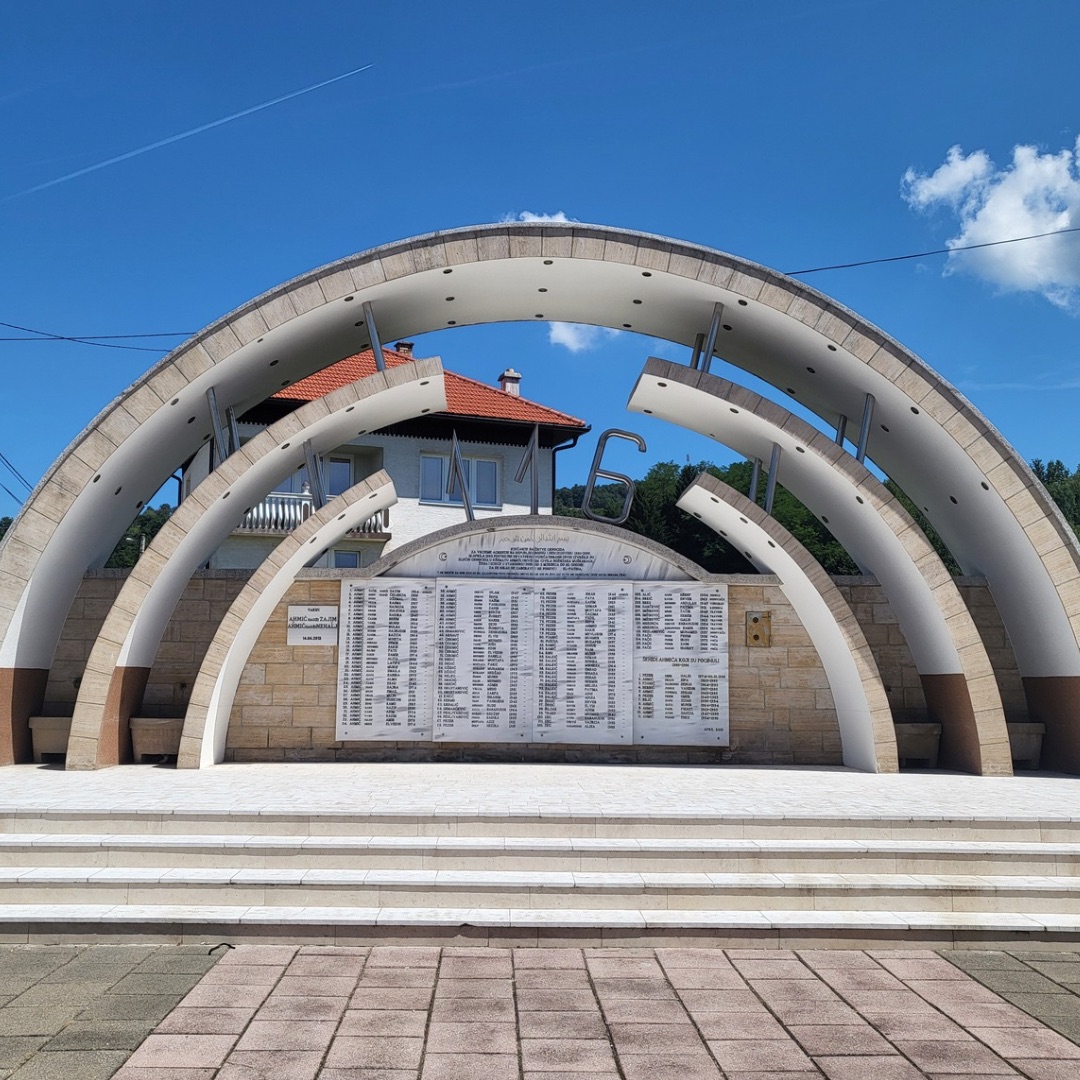
    Since Our World Too was founded in 2019, part of our mandate has been to raise awareness about the Bosnian Genocide through interviewing survivors, posting informative social media posts, writing blog articles recommending books written by survivors and through our podcast, More Than A Statistic.

    In an ambitious new project, Our World Too is creating an interactive resource that will display information related to the Bosnian Genocide from across Bosnia and Herzegovina. Mapping the Bosnian Genocide (MTBG) is currently in its early stages, and we hope this project will contribute to the already existing efforts to commemorate the Bosnian Genocide, remember victims, stand in solidarity with survivors, combat genocide denial and highlight the dangers of dehumanising language.

    We will be launching MTBG later this year. For more information about the project, please keep checking the MTBG website for more details.

    People always discuss genocide as a risk that might happen in the future, they always think it’s a future problem. But the risk is now and we can’t be blind to the risks of genocide, it’s happening now in Palestine, to the Uyghurs and the Rohingyas but it is never discussed like it’s in the present, it’s always a ‘future’ problem or ‘it might never happen’. As a survivor of Srebrenica – it's only talked about on one specific day but during those few days we need to tell people about the genocide, but we must also remind people that genocides continue to happen today.

    About the Bosnian Genocide

    The Bosnian Genocide lasted from 1992 to 1995 when the Dayton Peace Agreement was signed, however, the violence lasted well into 1996, after the signing of the ‘peace agreement’.

    The Bosnian Genocide was a systematic effort by Serb and later Croat nationalists to divide Bosnia and Herzegovina to create Greater Serbia and Greater Croatia respectively. In numbers:

    • Over 100,000 people were killed, which included 8,372 Muslim men and boys in Srebrenica.
    • Over 2 million people were displaced.
    • Anywhere from 20,000 to 50,000 girls and women were subjected to sexual violence.

    By themselves, these numbers are horrifying, but people are not numbers, and numbers tell us nothing about the conditions people had to live through, their stories or the different genocidal tactics used to displace millions of people across Bosnia and Herzegovina.

    There were stages to the Bosnian Genocide, and the tactics used by the Serbs varied from city to city. The tactics used in my hometown Banja Luka were different from other places in Bosnia. Banja Luka was supposed to become the capital of the new creation that would be called Republika Srpska, so they didn’t want to destroy it. They cut our electricity and telecommunications and spread propaganda on TV and radio stations. Destroyed the mosques and robbed and killed some people. There was a camp where they took the people they picked up from the streets.

    Genocidal rhetoric

    The rhetoric used to justify and sustain the Bosnian Genocide has been repeated recently to describe refugees and displaced communities around the world. Stage 4 of the 10 stages of genocide specifically refers to the dehumanisation of a group of people. An example of this stage is members of the group being equated to animals, insects, vermin, or diseases. During this stage, a specific group is dehumanised to the point that the use of violence and discriminatory policies against them is legitimised. 

    Unless we learn from the past, we will always risk repeating it. This is why we believe it is imperative to raise awareness about the Bosnian Genocide, to not only stand in solidarity with the victims and survivors but also to highlight the dangers of when dehumanising language goes unchecked.

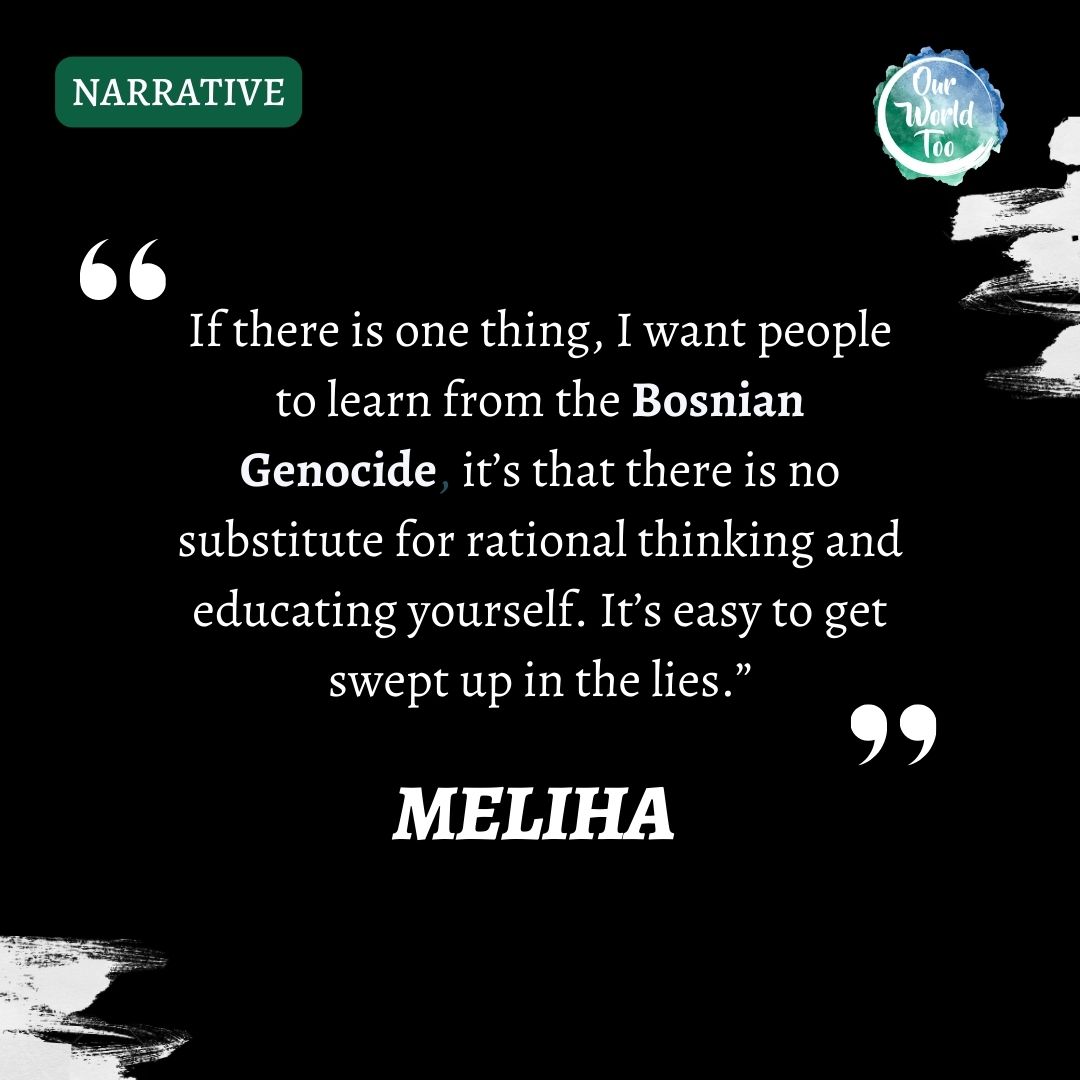
    I want people to embrace Srebrenica as a lesson about the dangers of ultra-nationalism and how it can end up in genocide. After WW2, we said, ‘Never Again’ and multiple organisations like the UN and NATO were born out of Nuremberg and it sent a strong message. Despite this, 50 years later it happened in Europe again. What message are we sending to the world? All these institutions which were built out of WW2 should be a lesson and research should be conducted about how this could happen just 50 years after the Holocaust. There is always the possibility of genocide if we don’t learn and reflect.

    If you would like more information or would like to volunteer to take part in the project, please contact info@ourworldtoo.org.uk

    If you would like to learn more about the Bosnian Genocide, you can read through some of our narratives.

    That’s where you feel the ethnic cleansing, in the silence – Adnan Mahmutović

    Peace isn’t the absence of war, it’s the steps we take to stop war – Smajo Bešo

    I want people to embrace Srebrenica as a lesson about the dangers of ultra-nationalism – Alma Mustafić

    It’s our victory to come back to Srebrenica –Ahmed Hrustanović

    Genocide is happening now – Jasmin Jusuf Jusufović 

Business Broadcast

Business Broadcast
  • Mapping the Bosnian Genocide

    Since Our World Too was founded in 2019, part of our mandate has been to raise awareness about the Bosnian Genocide through interviewing survivors, posting informative social media posts, writing blog articles recommending books written by survivors and through our podcast, More Than A Statistic.

    In an ambitious new project, Our World Too is creating an interactive resource that will display information related to the Bosnian Genocide from across Bosnia and Herzegovina. Mapping the Bosnian Genocide (MTBG) is currently in its early stages, and we hope this project will contribute to the already existing efforts to commemorate the Bosnian Genocide, remember victims, stand in solidarity with survivors, combat genocide denial and highlight the dangers of dehumanising language.

    We will be launching MTBG later this year. For more information about the project, please keep checking the MTBG website for more details.

    People always discuss genocide as a risk that might happen in the future, they always think it’s a future problem. But the risk is now and we can’t be blind to the risks of genocide, it’s happening now in Palestine, to the Uyghurs and the Rohingyas but it is never discussed like it’s in the present, it’s always a ‘future’ problem or ‘it might never happen’. As a survivor of Srebrenica – it's only talked about on one specific day but during those few days we need to tell people about the genocide, but we must also remind people that genocides continue to happen today.

    About the Bosnian Genocide

    The Bosnian Genocide lasted from 1992 to 1995 when the Dayton Peace Agreement was signed, however, the violence lasted well into 1996, after the signing of the ‘peace agreement’.

    The Bosnian Genocide was a systematic effort by Serb and later Croat nationalists to divide Bosnia and Herzegovina to create Greater Serbia and Greater Croatia respectively. In numbers:

    • Over 100,000 people were killed, which included 8,372 Muslim men and boys in Srebrenica.
    • Over 2 million people were displaced.
    • Anywhere from 20,000 to 50,000 girls and women were subjected to sexual violence.

    By themselves, these numbers are horrifying, but people are not numbers, and numbers tell us nothing about the conditions people had to live through, their stories or the different genocidal tactics used to displace millions of people across Bosnia and Herzegovina.

    There were stages to the Bosnian Genocide, and the tactics used by the Serbs varied from city to city. The tactics used in my hometown Banja Luka were different from other places in Bosnia. Banja Luka was supposed to become the capital of the new creation that would be called Republika Srpska, so they didn’t want to destroy it. They cut our electricity and telecommunications and spread propaganda on TV and radio stations. Destroyed the mosques and robbed and killed some people. There was a camp where they took the people they picked up from the streets.

    Genocidal rhetoric

    The rhetoric used to justify and sustain the Bosnian Genocide has been repeated recently to describe refugees and displaced communities around the world. Stage 4 of the 10 stages of genocide specifically refers to the dehumanisation of a group of people. An example of this stage is members of the group being equated to animals, insects, vermin, or diseases. During this stage, a specific group is dehumanised to the point that the use of violence and discriminatory policies against them is legitimised. 

    Unless we learn from the past, we will always risk repeating it. This is why we believe it is imperative to raise awareness about the Bosnian Genocide, to not only stand in solidarity with the victims and survivors but also to highlight the dangers of when dehumanising language goes unchecked.

    I want people to embrace Srebrenica as a lesson about the dangers of ultra-nationalism and how it can end up in genocide. After WW2, we said, ‘Never Again’ and multiple organisations like the UN and NATO were born out of Nuremberg and it sent a strong message. Despite this, 50 years later it happened in Europe again. What message are we sending to the world? All these institutions which were built out of WW2 should be a lesson and research should be conducted about how this could happen just 50 years after the Holocaust. There is always the possibility of genocide if we don’t learn and reflect.

    If you would like more information or would like to volunteer to take part in the project, please contact info@ourworldtoo.org.uk

    If you would like to learn more about the Bosnian Genocide, you can read through some of our narratives.

    That’s where you feel the ethnic cleansing, in the silence – Adnan Mahmutović

    Peace isn’t the absence of war, it’s the steps we take to stop war – Smajo Bešo

    I want people to embrace Srebrenica as a lesson about the dangers of ultra-nationalism – Alma Mustafić

    It’s our victory to come back to Srebrenica –Ahmed Hrustanović

    Genocide is happening now – Jasmin Jusuf Jusufović 

  • Published On: September 13th, 2023
  • Published On: August 7th, 2023

The Designer Show

The Designer Show

Fresh Podcasts

Lorem ipsum dolor sit amet, consectetur adipiscing elit. Sed nec pellentesque purus. Nunc finibus urna eget est molestie, non dignissim nulla cursus. Proin hendrerit, lacus vitae imperdiet rhoncus, tortor quam sodales lorem, vitae hendrerit est nulla at dolor. Quisque dictum dui eget turpis dapibus pharetra.

Yoga For Beginners

Lorem ipsum dolor sit amet, consectetur adipiscing elit. Sed nec pellentesque purus. Nunc finibus urna eget est molestie, non dignissim nulla cursus. Proin hendrerit, lacus vitae imperdiet rhoncus, tortor quam sodales lorem, vitae hendrerit est nulla at dolor. Quisque dictum dui eget turpis dapibus pharetra.

    This report examines how increased wildfire frequency and severity, driven by climate change, is causing rising levels of evacuation and displacement. Using the 2024 wildfires in Jasper, Canada as a case study, the analysis combines data on wildfire trends with personal narratives of displaced residents to spotlight the human and systemic consequences.

    Key findings show that many evacuees faced poor communication, psychological distress, difficulties accessing aid, and long-term instability even when their homes survived. The report argues that current emergency response and support systems are inadequate for a future where climate disasters become more common.

    It recommends urgent investments in prevention (e.g. fire-resilient housing, vegetation management), improved disaster communication and evacuation planning, and stronger community-led recovery mechanisms, all informed by real lived experiences.

    Ultimately, the report calls for a shift: from reacting to disasters to preparing proactively, building resilience in at-risk communities, and centring social justice as climate impacts worsen.

    A research project by Kate Rowbottom for Our World Too

Business Broadcast

Lorem ipsum dolor sit amet, consectetur adipiscing elit. Sed nec pellentesque purus. Nunc finibus urna eget est molestie, non dignissim nulla cursus. Proin hendrerit, lacus vitae imperdiet rhoncus, tortor quam sodales lorem, vitae hendrerit est nulla at dolor. Quisque dictum dui eget turpis dapibus pharetra.

The Designer Show

Lorem ipsum dolor sit amet, consectetur adipiscing elit. Sed nec pellentesque purus. Nunc finibus urna eget est molestie, non dignissim nulla cursus. Proin hendrerit, lacus vitae imperdiet rhoncus, tortor quam sodales lorem, vitae hendrerit est nulla at dolor. Quisque dictum dui eget turpis dapibus pharetra.

    This report examines how increased wildfire frequency and severity, driven by climate change, is causing rising levels of evacuation and displacement. Using the 2024 wildfires in Jasper, Canada as a case study, the analysis combines data on wildfire trends with personal narratives of displaced residents to spotlight the human and systemic consequences.

    Key findings show that many evacuees faced poor communication, psychological distress, difficulties accessing aid, and long-term instability even when their homes survived. The report argues that current emergency response and support systems are inadequate for a future where climate disasters become more common.

    It recommends urgent investments in prevention (e.g. fire-resilient housing, vegetation management), improved disaster communication and evacuation planning, and stronger community-led recovery mechanisms, all informed by real lived experiences.

    Ultimately, the report calls for a shift: from reacting to disasters to preparing proactively, building resilience in at-risk communities, and centring social justice as climate impacts worsen.

    A research project by Kate Rowbottom for Our World Too

Search Our PodcastsArticles

Search to find what you’re looking for

Fresh Content
Direct to Your Inbox

Just add your email and hit subscribe to stay informed.